Rehearse a camp chair through sitting, standing and packing
A chair can feel appealing for thirty seconds and awkward over a whole evening. Evaluate the transitions as carefully as the seat. This exercise focuses on your ordinary sitting and packing routine, using a stable permitted surface and the manufacturer's setup and load instructions.
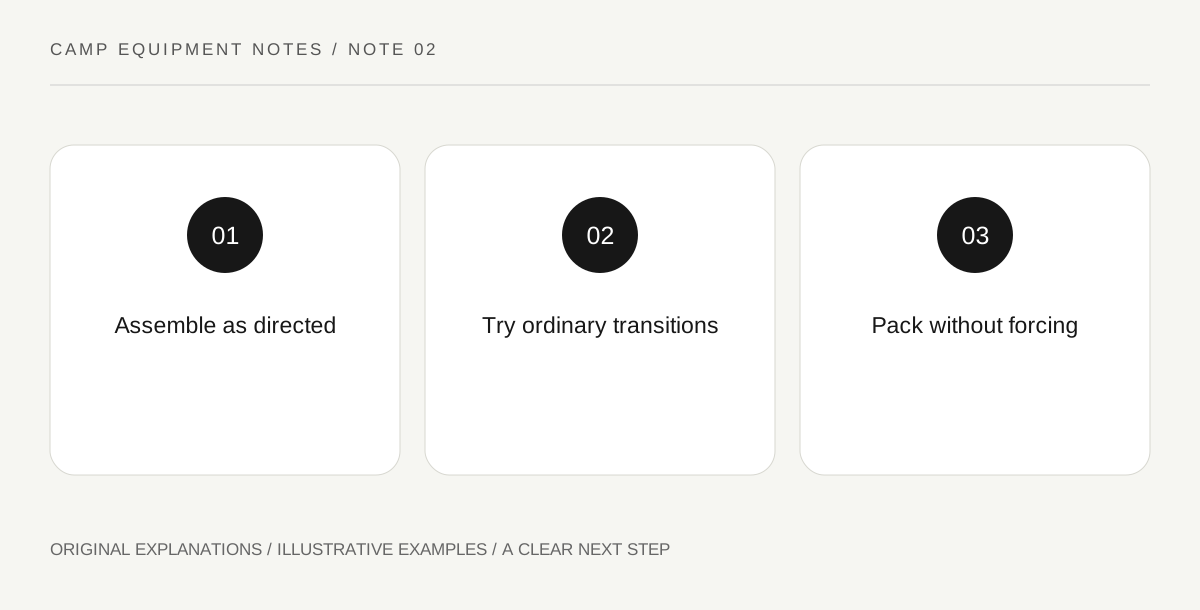
Original explanatory diagram. Read the full method and limitations below.
Open the complete chair
Remove the chair from its bag and identify the parts before unfolding it. Check the locking arrangement, fabric attachment and any adjustable elements against the manual. Keep fingers clear of hinges and pinch points. Do not begin with the chair partly assembled merely because it appears able to hold a person. A demonstration in a shop or at home should resemble the intended setup rather than rely on someone steadying an incomplete frame.
Observe the first and last movement
Sit down and stand up in your normal way, wearing the layers and footwear you expect at camp. Notice whether the seat edge catches behind the knees, whether the arms interfere with movement and whether you can rise without pulling on an unsupported part. Comfort while motionless is only one criterion. Someone with particular mobility needs may require a more supportive arrangement and professional advice rather than a lighter or lower chair selected solely for its packed size.
Give the belongings a sensible place
Try reaching your water bottle and handling a book while seated. A cup holder that pushes a drink into an elbow path may be less useful than it looks. Keep hot liquids secure and avoid attaching heavy bags to a chair unless its manufacturer allows that use. Compare the actual sitting position with the height of the table you will use; a low lounge chair and a dining table may each be comfortable while working poorly together.
Close the loop with pack-down
Fold the chair following the instructions and put it back into the supplied bag without forcing the fabric or trapping fingers. Check whether the bag closure remains accessible and whether the packed shape fits its transport space. A chair that requires one person to squeeze it while another pulls the bag may create a recurring nuisance. Note the awkward action specifically so that any later replacement solves a real problem rather than simply offering a different color.
Illustrative worked example
Illustrative scenario: a camper compares two chairs with similar packed lengths. One feels softer while seated, but its low position makes standing awkward when wearing several layers. The other works comfortably with the picnic table and packs without a struggle. The camper records seat transition and table height as the deciding factors. This is an example of a personal fit assessment, not a claim that either chair is better for everyone.
Questions that come up
Can I test a chair on uneven ground?
Use the conditions permitted in the instructions and avoid deliberately destabilizing it. A successful indoor trial does not establish suitability for every campsite surface.
Does a higher load rating prove comfort?
A stated load limit concerns permitted use under specified conditions. It does not measure seat shape, ease of standing or your preferred sitting position.
References and scope
These sources support the factual background. Examples and exercises are original illustrative teaching material. References do not imply endorsement.
- NPS: Finding and Setting Up a Campsite — Designated campsite selection, local requirements and environmental hazards.