Choose a camp towel by the route from washing to drying
A towel has to work twice: first when wet hands or a shower need it, and later when the damp fabric must be carried and dried. Assess both stages. A compact package is useful only if the towel remains manageable through the actual campsite routine.
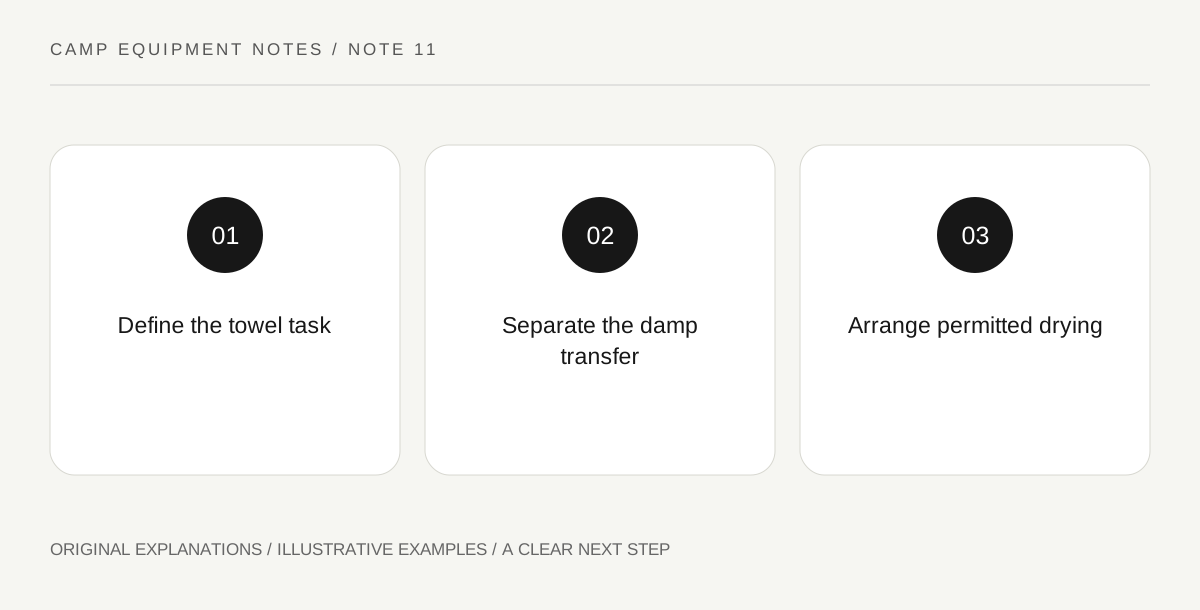
Original explanatory diagram. Read the full method and limitations below.
Name the towel's single main task
Separate a personal shower towel from a kitchen cloth, dish towel or equipment-cleaning rag. These objects should not silently trade jobs because they have similar colors. Decide how much coverage and handling space the main task requires. Try the size at home before comparing packed dimensions. A tiny cloth may be useful for hands but frustrating after a shower, while a large bath towel can consume more drying space than the campsite routine provides.
Check how you will carry it wet
Walk through the route to the facilities with the towel, toiletries, clean clothes and footwear you actually need. Identify what stays dry and where damp fabric goes afterward. A bag that contains moisture during a short transfer should not become a long-term sealed storage solution. Choose a way to keep the towel separate from clean sleeping equipment. Avoid hanging belongings on fittings that are not provided or permitted for that purpose.
Plan a permitted drying location
Check the campground's rules about lines and attachments before planning to string fabric between trees. Use an approved arrangement that does not obstruct paths or neighboring pitches. At home, test whether the towel can spread rather than remain folded into a damp strip. Drying speed varies with fabric and conditions, so a marketing claim does not establish the exact time it will need during a cool or humid evening.
Build hygiene into the return routine
Read and follow the towel's laundering instructions. Keep each person's towel identifiable and separate personal items from food-contact cleaning cloths. On arrival home, open the damp return bag promptly and complete washing and drying as needed. Store clean towels where they can be selected without confusing them with workshop rags. A simple identification system can be more useful than purchasing several specialized fabrics with overlapping roles.
Illustrative worked example
Illustrative scenario: two campers initially buy identical gray towels for personal washing and dishes. During a packing rehearsal they notice that the roles are indistinguishable. They label the personal towels and select a visibly different cloth for the kitchen. Their permitted drying arrangement fits only one full towel at a time, so they plan alternating use and immediate home care. This is an organizational example, not a measured fabric comparison.
Questions that come up
Does quick-dry mean dry by bedtime?
The label does not guarantee a duration under every condition. Consider temperature, humidity and whether the towel can actually spread out during the trip.
Can a sealed bag solve wet storage?
It can contain a short transfer when appropriate, but it does not dry the fabric. Open and care for the towel promptly instead of forgetting it inside the bag.
References and scope
These sources support the factual background. Examples and exercises are original illustrative teaching material. References do not imply endorsement.
- NPS: Finding and Setting Up a Campsite — Designated campsite selection, local requirements and environmental hazards.
- Cascade Designs: Keeping an MSR Tent Clean and Dry — Model-specific tent cleaning and thorough drying; not a universal cleaner recipe.