Build a low-equipment camp hot-drink service
A familiar hot drink can require surprisingly many small objects when made outdoors. Design one simple service for an established campsite, with suitable water, food handling and approved cooking equipment. The interesting question is which steps are worth carrying rather than how closely camp can resemble a kitchen counter.
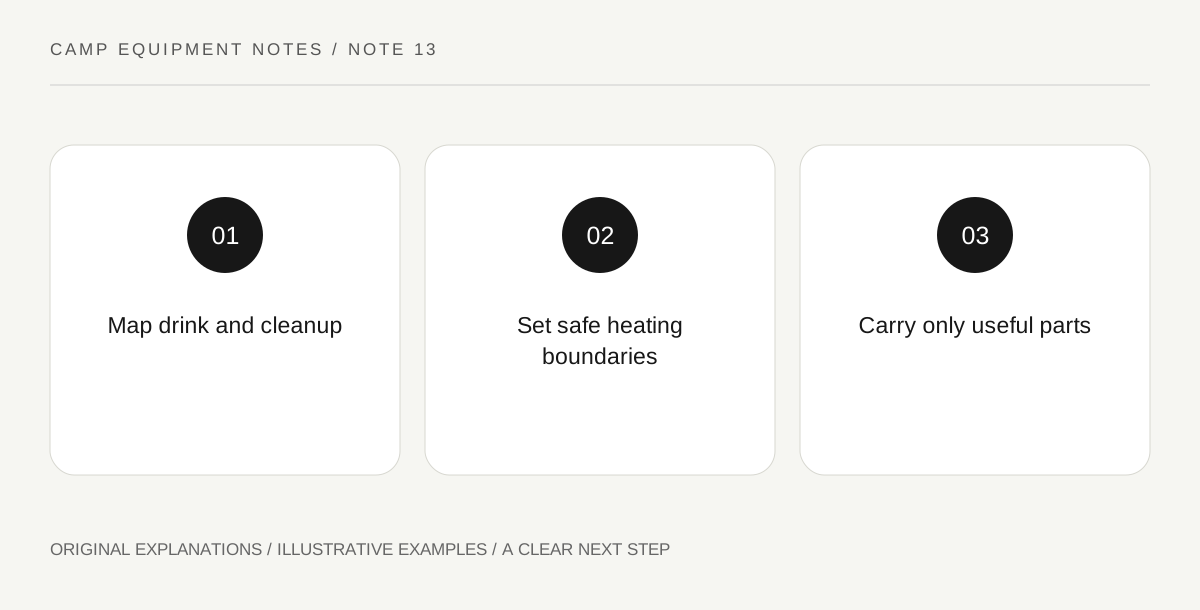
Original explanatory diagram. Read the full method and limitations below.
Write the drink process in full
Choose the actual drink and list preparation, serving and cleanup. Include an appropriate vessel, measuring method, safe handling of hot water and a place for used ingredients or packaging. A filter holder alone does not make a complete coffee service. Think about everyone who will use it and whether a simpler option suits some people better. Avoid designing a specialized ritual that leaves one tired camper responsible for operating unfamiliar equipment for the whole group.
Separate brewing from heating
Select and operate heating equipment only according to its manual and local restrictions. The preferred drink does not justify placing a stove inside a tent or balancing a pot on unsuitable furniture. Decide where people can wait without crossing the hot-water handling area. If conditions or restrictions make heating impractical, have a suitable alternative that does not depend on improvising a flame. The beverage routine should remain subordinate to the campsite's safety requirements.
Choose a manageable serving arrangement
Check that cups fit the intended drink quantity and can be handled comfortably. Keep drinking vessels separate from fuel containers and non-food equipment. A lid, handle or insulated wall has its own instructions and limitations; do not assume any cup is leakproof or safe to grasp when full of hot liquid. Try the full routine at home, including setting the vessel down and passing supplies, rather than comparing only the attractiveness of the brewer.
Account for the used materials
Plan how grounds, tea leaves, packaging and washing water will be handled under the campground's rules. A tiny brewer can still create a cumbersome cleanup if its filter is awkward to empty. Pack reusable items clean and dry for the next use. After the trip, review whether the extra parts improved the experience enough to justify their handling, leaving out accessories that were carried only because they belonged to a set.
Illustrative worked example
Illustrative scenario: three adults want different morning drinks. They rehearse a service using one approved water-heating setup and each person's suitable cup. One chooses tea, another an uncomplicated coffee option and the third a non-caffeinated drink. They assign a used-materials container and a clear serving position. The plan avoids carrying three separate preparation systems and makes no claim about a particular method tasting better.
Questions that come up
Should I bring a grinder?
Bring it only if the extra preparation and cleanup matter to you and fit the trip. A simpler familiar option can be an intentional choice.
Can the drink station stay inside the tent?
Keep heating and combustion equipment out of enclosed sleeping spaces. Food and scented supplies must follow the campsite's wildlife-storage requirements, even when the service looks tidy.
References and scope
These sources support the factual background. Examples and exercises are original illustrative teaching material. References do not imply endorsement.
- NPS: Finding and Setting Up a Campsite — Designated campsite selection, local requirements and environmental hazards.
- NPS: Camping Safety, Sequoia and Kings Canyon — Tents and picnic shelters do not provide safe thunderstorm shelter; avoid combustion in closed spaces.