Choose quiet campsite equipment through an ordinary use rehearsal
Small equipment sounds can become conspicuous after a campground settles for the night. Rehearse the objects you will handle during quiet hours: closures, lights and personal items. The exercise supports courtesy and convenience while keeping essential access and safe operation fully available.
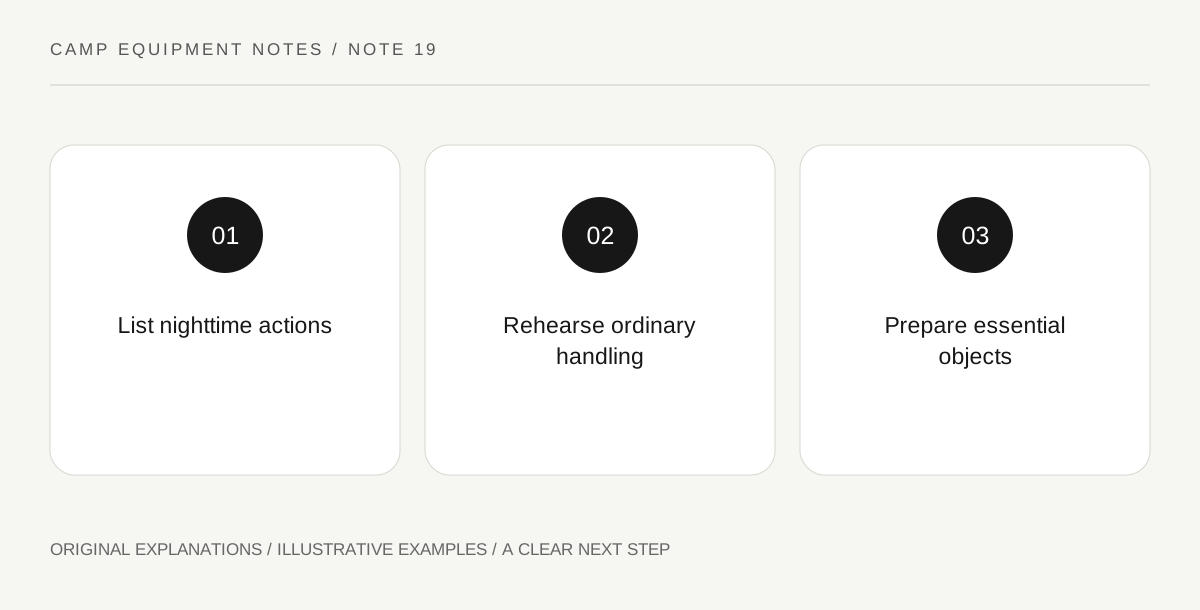
Original explanatory diagram. Read the full method and limitations below.
Identify the likely nighttime actions
List what people may genuinely need after others are asleep: leaving the tent, finding glasses, adjusting a personal light or obtaining a necessary layer. Keep essential items accessible instead of pursuing silence at the expense of safety. Separate these actions from optional entertainment or unpacking. Checking the campground's quiet-hour rules provides a shared boundary, while discussing different sleep schedules helps the group understand where small changes would actually help.
Notice the whole sound sequence
At home, handle each item in an ordinary way and listen to the complete process. A quiet pouch may still contain loose metal tools that rattle. A lamp may make a control sound, or a rigid case may require several forceful snaps. Describe the specific action rather than ranking products by vague quietness. You do not need a laboratory sound measurement to recognize that an avoidable search creates more disturbance than a prepared item location.
Prepare without unsupported modification
Pack the necessary small items together and secure loose contents using appropriate storage. Learn controls and closure behavior in daylight. Do not disable a warning sound, alter an electrical device or modify a required locking mechanism simply to reduce noise. Follow manufacturer instructions and preserve safety functions. A supported lower light setting or an easier-to-reach pouch can improve the routine without changing what the equipment was designed to do.
Agree on a considerate fallback
If someone needs an essential item during the night, the plan should allow them to get it without embarrassment or delay. Optional noisy tasks can wait until an appropriate time or move to an area where they are permitted. Avoid assuming headphones make every entertainment setup acceptable; voices, light and movement can still disturb others. Review the routine after the trip and change the recurring nuisance rather than adding rules for every imaginable sound.
Illustrative worked example
Illustrative scenario: one camper usually searches through a large bin for a light after everyone goes to bed. A rehearsal reveals that the loose metal tools and several clips create most of the disturbance. They put the personal light in a known supported pocket before nightfall and leave the maintenance bin closed. The improvement comes from preparation, with no device altered and no essential nighttime movement discouraged.
Questions that come up
Should I buy special silent equipment?
Identify the recurring action first. Placement and preparation may resolve the disturbance more effectively than replacing an object whose actual behavior you have not observed.
Is any nighttime noise unacceptable?
Necessary movement and safety needs still matter. Aim for considerate preparation and clear group expectations, not an unrealistic rule that prevents someone from asking for help.
References and scope
These sources support the factual background. Examples and exercises are original illustrative teaching material. References do not imply endorsement.
- NPS: Finding and Setting Up a Campsite — Designated campsite selection, local requirements and environmental hazards.