Give a camping table separate preparation and landing zones
A crowded camp table can turn a simple breakfast into a sequence of moving other people's belongings. Plan the surface around actions rather than accessories. A preparation area, a place for clean dishes and a temporary landing space can work within the furniture already provided.
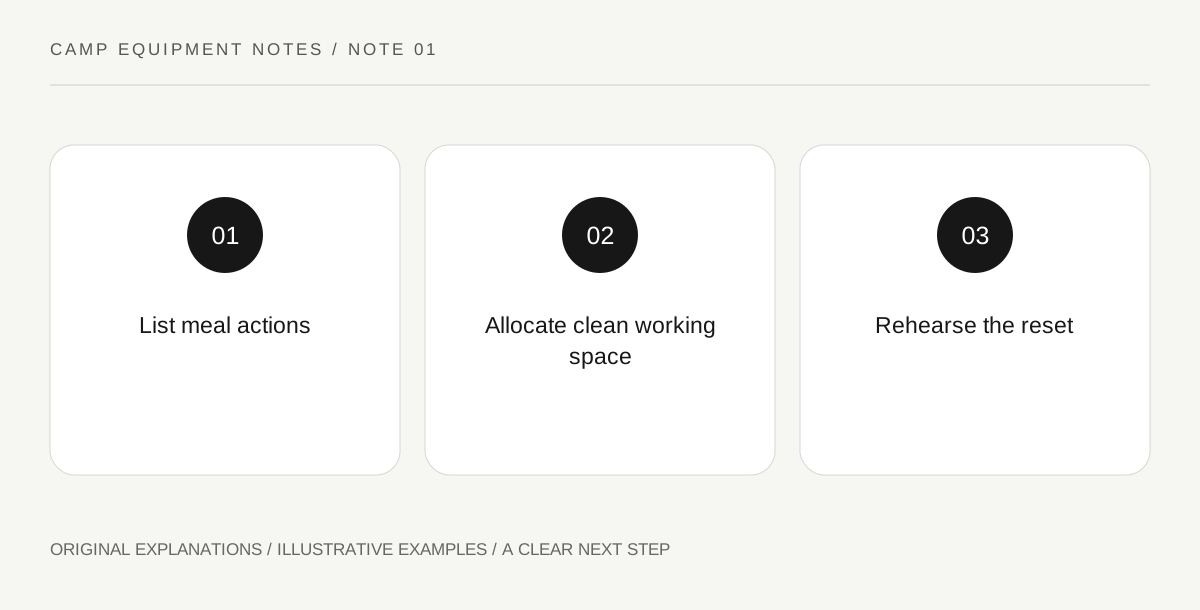
Original explanatory diagram. Read the full method and limitations below.
Draw the tasks before adding organizers
Write the actual sequence for one ordinary meal: unpack ingredients, prepare them, serve, collect used dishes and clean. Draw those tasks on a rough rectangle representing the table. Include the places where people sit and approach. A large storage box can consume the very surface it is supposed to organize. Keep food handling and used dishes separated in the plan, and follow the campsite's food-storage rules when the meal is over rather than treating a tidy table as secure storage.
Reserve a landing area that stays empty
An empty patch of table has a job. It receives a mug while someone opens a bag, a serving bowl before plates are ready or the clean utensil that otherwise lands on the ground. Mark this space in the sketch and avoid filling it with permanent equipment. If every square is allocated, the first unexpected object starts a rearrangement. Choose a smaller collection of items that genuinely need to remain accessible through the meal.
Check reach and circulation
Rehearse where the person preparing food stands, where diners pass and which side carries the clean dishes. A box opening toward the cook may block the approach whenever its lid rises. Keep knives and other sharp equipment controlled and stored appropriately, with children and pets considered. Do not assign a stove to a crowded dining surface merely because it fits in the drawing; placement and clearances must come from the stove instructions and site requirements.
Give cleanup its own ending
Decide which items leave the table first after the meal and where used dishes wait for approved washing. Put the table back into its non-meal arrangement rather than letting food packaging accumulate as an accidental centerpiece. A small wipeable label on a storage box can remind everyone where clean items return. Keep the layout simple enough that another camper can restore it without consulting the person who designed it.
Illustrative worked example
Illustrative scenario: three campers have one picnic table and two equipment bins. They initially place both bins on the tabletop, leaving little room for plates. Moving one closed bin to a permitted stable location frees a preparation end and a landing corner. At breakfast the clean plates stay together, while used mugs move directly to the washing container. No new organizer is purchased; the improvement comes from changing which objects occupy the surface.
Questions that come up
Should every item have a marked square?
Only mark boundaries that prevent recurring confusion. Overly detailed maps are difficult to maintain when the menu changes; broad zones usually communicate the important distinctions.
What if the campsite has no table?
Choose suitable furniture after checking the permitted setup area and the real tasks. A ground sheet does not automatically provide a safe cooking or cutting surface.
References and scope
These sources support the factual background. Examples and exercises are original illustrative teaching material. References do not imply endorsement.
- NPS: Finding and Setting Up a Campsite — Designated campsite selection, local requirements and environmental hazards.