Use a camp lantern without lighting the whole neighborhood
A brighter campsite is not always an easier campsite to use. A lantern should help people find the objects and routes they need while respecting quiet surroundings. Plan light placement and controls before buying more output, and keep any electrical device within its stated outdoor-use limits.
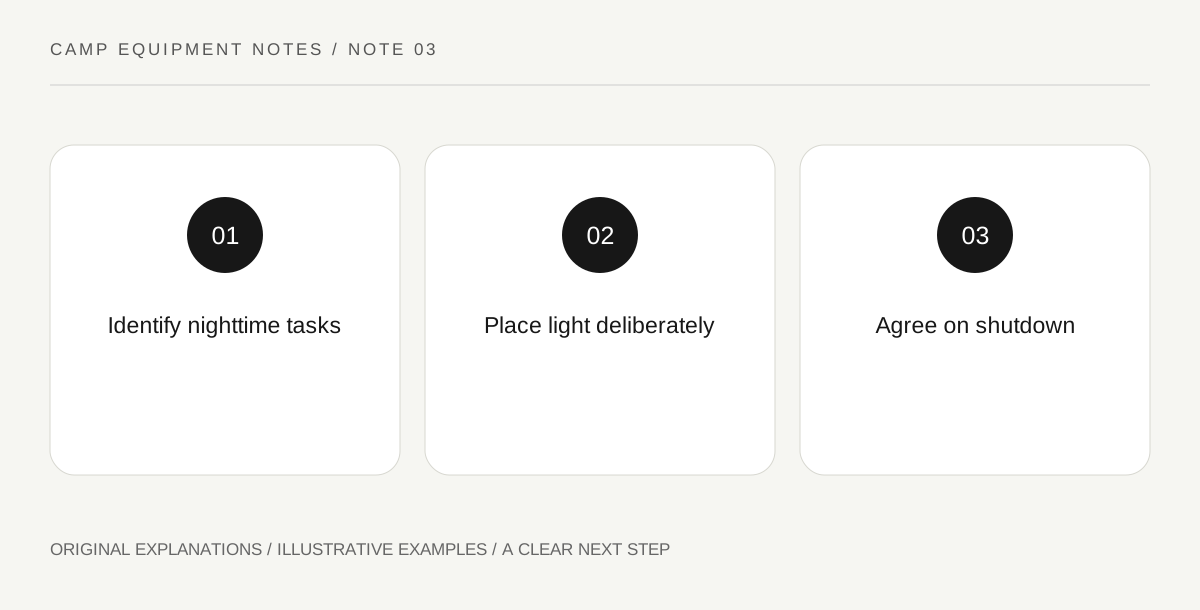
Original explanatory diagram. Read the full method and limitations below.
Name the small jobs light must serve
List the activities that actually happen after dark: reading a label, finding a zipper, clearing dishes or locating the route to the facilities. These tasks may occur in different places and need different light levels. A bright central lantern can leave a person's hands in shadow while shining directly toward a neighboring tent. Sketch the useful areas instead of treating the entire pitch as a space that must be illuminated equally.
Start with position before brightness
On a safe evening trial, place the lantern on a stable surface permitted by its manufacturer. Observe glare from seated and standing positions and consider where someone could knock it over. Use only approved hanging or mounting arrangements; an improvised overhead attachment adds a falling-object problem. Moving a light closer to a table task may make a lower setting sufficient, but it should not obstruct circulation or put cords across a walking route.
Learn the controls in daylight
Practice changing modes, turning the device off and finding the battery indication. Some controls cycle through a flashing mode or retain the last setting; knowing the behavior avoids experimenting while others sleep. Check the actual manual for charging, water exposure and battery handling. The printed runtime may refer to a particular mode and test condition, so treat your preferred setting as a distinct choice rather than borrowing the longest headline number.
Build a quiet shutdown
Agree when shared lighting will be reduced and which small personal light remains available for necessary movement. Keep exits and essential belongings identifiable without leaving a bright lamp running unnecessarily. If the campsite sets lighting or quiet-hour requirements, include them in the plan. Avoid combustion lanterns as a workaround in enclosed spaces; a lighting decision should not introduce fumes, heat or fire exposure into a tent or sleeping area.
Illustrative worked example
Illustrative scenario: two friends place one lantern in the middle of their table and find that a water container casts a large shadow. They move the container, lower the lantern setting and position it toward their own seating. One person keeps a personal light for a later facilities trip. Their successful change is recorded as a layout and courtesy improvement, not a measured claim about energy savings or guaranteed battery life.
Questions that come up
Should I choose the brightest available lantern?
Choose for the tasks and permitted conditions. Maximum output can be useful information, but it does not answer questions about glare, controls or placement.
Is a lantern a substitute for personal lighting?
Shared lighting may be unavailable when someone needs to leave the table. Plan each essential journey so it does not depend on borrowing a light another person is using.
References and scope
These sources support the factual background. Examples and exercises are original illustrative teaching material. References do not imply endorsement.
- NPS: Finding and Setting Up a Campsite — Designated campsite selection, local requirements and environmental hazards.
- NPS: Camping Safety, Sequoia and Kings Canyon — Tents and picnic shelters do not provide safe thunderstorm shelter; avoid combustion in closed spaces.