Separate clean, used and genuinely wet clothing at camp
A single laundry bag can hide several different conditions: clothes ready to wear again, dirty items and wet fabric needing prompt attention. Use a small separation system that reflects those conditions. The objective is a sensible return routine, not a miniature wardrobe organizer for every garment.
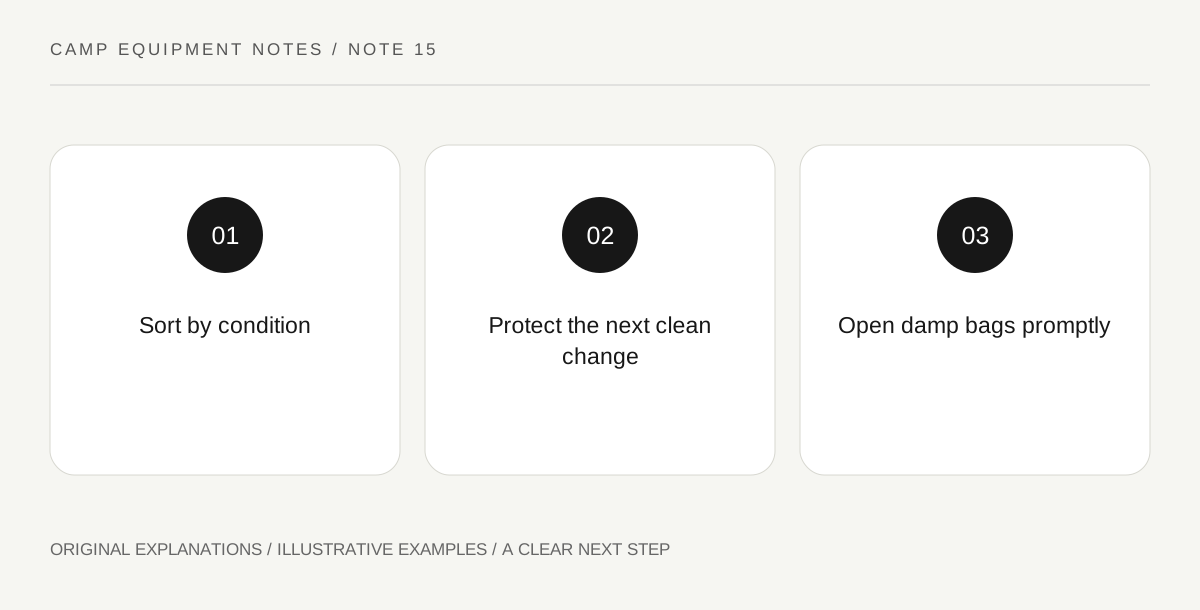
Original explanatory diagram. Read the full method and limitations below.
Describe condition rather than ownership alone
Sort clothing into usable, used but potentially wearable again, and needing washing or drying. The categories depend on the actual garment and situation; they are not a universal hygiene schedule. Keep personal needs and the care label in view. A shirt worn briefly over another layer may need different handling from damp socks. Naming the condition prevents a tidy closed bag from concealing work that still needs to happen.
Contain dirt without trapping it indefinitely
Use suitable bags for short transport and keep soiled items away from clean bedding and food-contact equipment. Avoid pretending that a sealed bag cleans or dries its contents. If an item is wet, plan when and where it can be opened safely and cared for. Respect campsite rules about drying lines and washing. The familiar home solution of hanging something over any available rail may be inappropriate in a shared or protected outdoor setting.
Keep the next change accessible
Pack the clothes needed after a shower or before departure where they can be removed without unloading dirty items. An obvious clean compartment can reduce repeated searching and handling. Label by function when several campers share a vehicle, while keeping individual clothing ownership clear. Do not compress every garment into its smallest possible package if doing so makes the next required change inaccessible or forces damp and dry items together.
Finish the system after arrival home
Open the return bags promptly and follow the garments' washing and drying instructions. Check pockets before laundering and inspect temporary containers for debris or moisture before putting them away. Return only clean, dry items to the ready camping kit. A durable note about which garment went unused can improve the next packing list, but avoid turning a single unusually warm or dry trip into a reason to omit necessary protective clothing.
Illustrative worked example
Illustrative scenario: two campers use one broad return sack. At home they discover that a damp towel has been pressed against otherwise dry clothes. On the next trip they give the towel a separate temporary transfer bag and keep a clean departure outfit accessible. The unpacking list begins with opening the damp items. Their lesson concerns condition and access, rather than a claim that one fabric or packing product prevents odor.
Questions that come up
Do I need a special bag for every garment?
Usually the useful distinction is condition or next use. Too many tiny bags can make the system harder to maintain than a few obvious groups.
Can used clothes become pillow filling?
Assess cleanliness, comfort and the planned role of those layers. Do not mix dirty or damp items into the sleep setup merely to save a small amount of space.
References and scope
These sources support the factual background. Examples and exercises are original illustrative teaching material. References do not imply endorsement.
- NPS: Finding and Setting Up a Campsite — Designated campsite selection, local requirements and environmental hazards.
- Cascade Designs: Keeping an MSR Tent Clean and Dry — Model-specific tent cleaning and thorough drying; not a universal cleaner recipe.