Keep stakes and their handling tools out of the loose-parts pile
A shelter kit is easier to trust when its small metal components have a clear count and storage route. This note concerns organizing stakes and approved handling tools for a designated campsite. Ground conditions, anchoring requirements and installation methods still come from the tent maker and site rules.
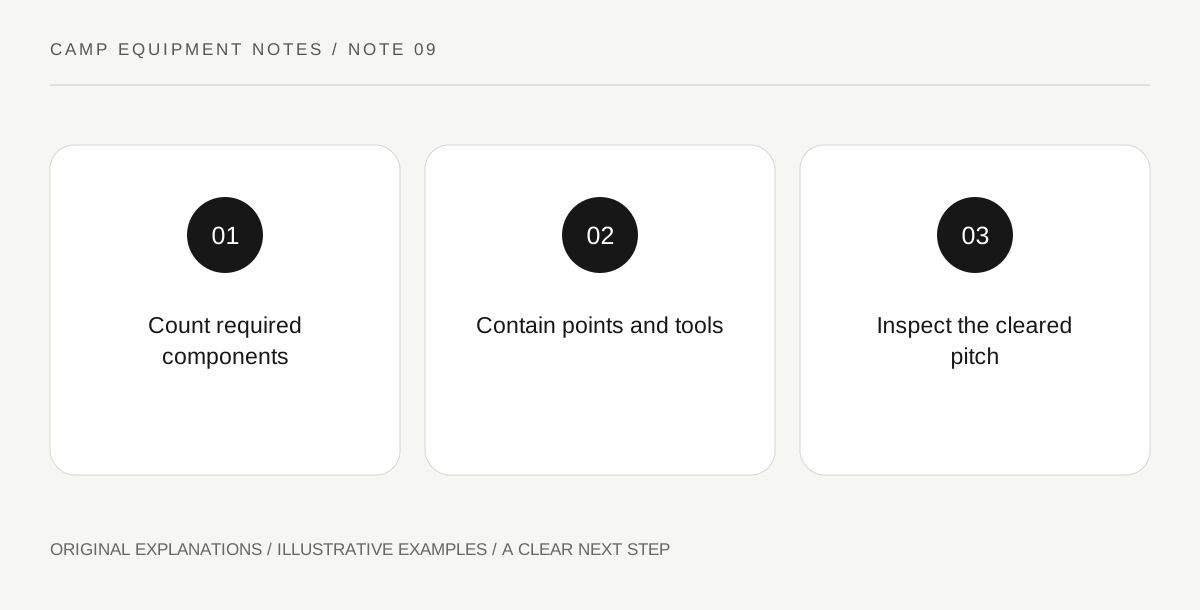
Original explanatory diagram. Read the full method and limitations below.
Count by the complete shelter setup
Use the model instructions to identify how many stakes and related components the intended setup requires. Distinguish supplied parts from additional approved parts needed for the planned configuration. A handful that looks familiar is not a count. Lay everything out on a visible surface before packing and identify bent, sharp or damaged pieces that should not return to the ready kit. Keep the count attached to the exact shelter rather than a generic camping box.
Give sharp and dirty pieces a container
Choose a bag or sleeve that contains the stakes without exposing points to tent fabric or hands searching through the load. Keep soiled pieces separate until they receive appropriate cleaning and drying. A thin grocery bag may organize a pile visually without providing useful protection. Test the packed arrangement gently and check that a point cannot press into adjacent equipment. Replace a damaged storage sleeve rather than allowing it to become an unexamined part of the kit.
Match the tool to permitted handling
Use the installation and removal method the equipment maker supports. Do not hammer through unexpected resistance or assume a stronger mallet resolves unsuitable ground. Ask the campground about the permitted pitching area when the surface or rules are unclear. Keep tools controlled during setup and away from children's play. A convenient location beside the tent door is not necessarily a good place to leave an exposed metal tool after the task ends.
Count again before leaving the pitch
Inspect the permitted setup area and return every removed component to its container. Record anything lost or damaged immediately, so the kit is not marked ready by habit. Leave no stakes or sharp fragments behind. At home, finish cleaning and drying before closing the ready bag. This small departure routine prevents both an incomplete next setup and an avoidable hazard for the next person using the campsite.
Illustrative worked example
Illustrative scenario: a shelter kit should contain ten stakes for the planned supported configuration. Before departure, the camper finds nine usable pieces and one visibly bent piece. They resolve the replacement through the maker's guidance rather than hoping fewer will be enough. At camp, the handling tool returns to its own sleeve. Departure includes a count and ground inspection before the tent area is declared clear.
Questions that come up
Can I replace a lost stake with any metal peg?
Check the shelter maker's specifications and campsite surface requirements. Similar appearance alone does not establish that a substitute is appropriate for the intended anchoring task.
Should I drive stakes wherever the tent fits?
Use the designated permitted area and follow local instructions. Avoid improvising around unknown underground services, restricted surfaces or unsuitable ground.
References and scope
These sources support the factual background. Examples and exercises are original illustrative teaching material. References do not imply endorsement.
- NPS: Finding and Setting Up a Campsite — Designated campsite selection, local requirements and environmental hazards.
- MSR: Tent Care Tips — Pole joints should be fully engaged; grit and careless handling can damage zippers.