Keep an offline manual library for the equipment actually packed
A phone full of downloaded manuals is useful only when the correct document can be found and matched to the item in front of you. Build a small offline library for the actual trip. Include model identity, supported instructions and a way to access essential information if the phone is unavailable.
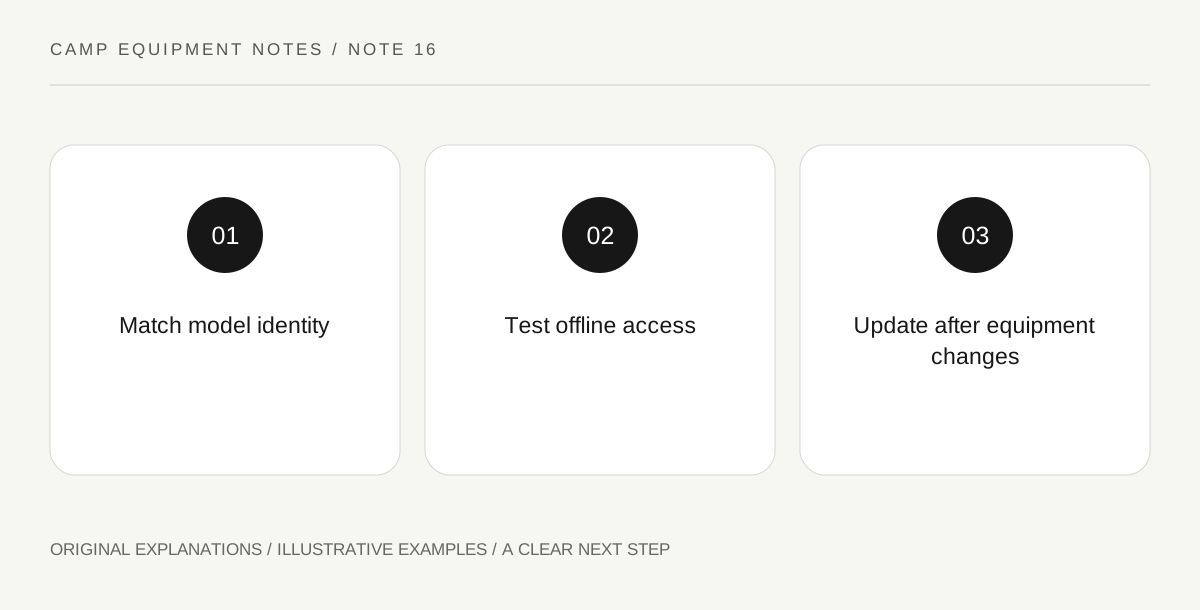
Original explanatory diagram. Read the full method and limitations below.
Match the document to the physical item
Read the model label on each piece of equipment and compare it with the manual's model and version. A product family name may cover several sizes or generations. Download instructions from the manufacturer rather than relying on an undated repost. Keep the original document title visible and add a short file name you understand. Photograph a label where appropriate, but remember that a photograph of a label does not replace the operating instructions.
Choose the documents that answer real questions
Prioritize setup, safe operation, shutdown and care for equipment you will use. A brochure can describe features without explaining restrictions. Check whether separate instructions exist for a battery, charger or accessory. Do not build an enormous folder merely to feel prepared; choose a manageable collection that can be navigated when someone is tired. Record any unresolved compatibility question and settle it with the manufacturer before treating the equipment as ready.
Test access without a connection
Open the saved files while the device is offline and confirm that diagrams remain readable. A browser bookmark or a page that depends on unavailable images may not provide the expected information. Locate the relevant section from the file list rather than from memory of the download process. Keep the device within its operating limits, charged and protected appropriately. Critical safety preparation should not depend entirely on a single phone continuing to function.
Make updates part of equipment changes
When a component is replaced or a different model is borrowed, update the library rather than quietly carrying the old document forward. Keep a simple index linking item, document and any approved accessory. Remove ambiguous duplicates from the trip folder while retaining useful historical records elsewhere. After the trip, note which questions were difficult to answer so the next edition improves navigation rather than merely accumulating more files.
Illustrative worked example
Illustrative scenario: a camper downloads a lantern brochure and assumes it includes charging instructions. An offline rehearsal reveals that the brochure links to a separate battery guide. They obtain the correct manufacturer document, verify it matches the actual battery and save the relevant instructions. A concise equipment index lists both files. The rehearsal exposes a missing dependency while internet access and time to ask questions are still available.
Questions that come up
Can I use a manual for a similar model?
Only when the manufacturer confirms it applies. Similar controls or appearance do not establish identical setup, limits or care instructions.
Should I print every page?
Choose a practical backup for the information that matters. A small relevant set can be easier to use than a large printout containing unrelated products and promotional material.
References and scope
These sources support the factual background. Examples and exercises are original illustrative teaching material. References do not imply endorsement.
- MSR: Tent Care Tips — Pole joints should be fully engaged; grit and careless handling can damage zippers.
- Therm-a-Rest: Sleeping Bag Care — Follow fill-specific cleaning advice and store dry bags without prolonged compression.