Give a sticking tent zipper an inspection before another pull
A reluctant zipper invites a stronger tug, especially when rain is approaching. Pause and identify what is stopping the slider. Fabric tension, trapped material and grit are different problems, and none is improved by assuming the door simply needs more force.
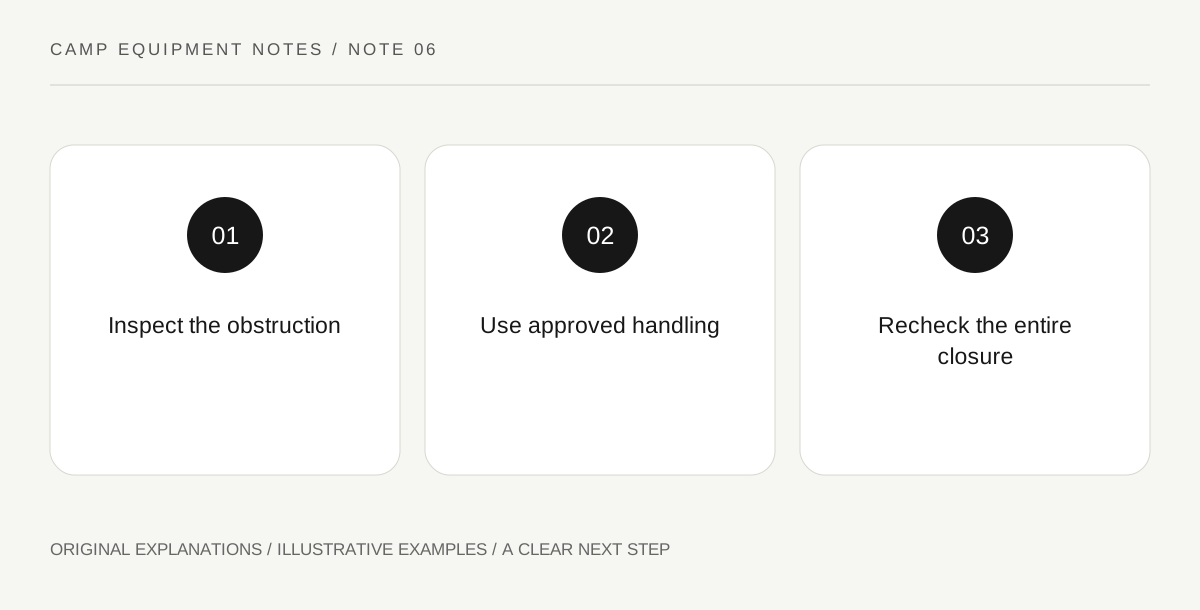
Original explanatory diagram. Read the full method and limitations below.
Remove the hurry from the diagnosis
Arrange a daylight inspection before departure if a zipper has behaved poorly on a previous trip. Assemble the tent as directed and look at the path of the closure. Is the fabric pulling diagonally, is an inner flap caught near the slider, or is dirt visible in the coil? Describe the observation rather than calling the zipper broken immediately. A clear description helps the manufacturer distinguish a handling problem from a component that needs service.
Reduce tension without changing the design
Use the pitching instructions to check that the shelter is arranged correctly and that a closure is not carrying an unintended load. Do not cut attachments or modify a structural element to make the door easier to close. MSR advises keeping zipper tracks clean and handling them carefully. When fabric is caught, follow the maker's release guidance; repeatedly pulling forward can enlarge the trapped area and damage material that was initially intact.
Match cleaning to the tent
Use the current care advice for the specific tent before applying a cleaner or lubricant. A household product that makes another zipper slide easily may be unsuitable for coated shelter fabric. Remove loose contamination by an approved method and let the tent dry as instructed. Keep sand away from the open bag during the process. The aim is an ordinary working closure, not a glossy coating whose long-term effect on the material is unknown.
Know when the closure needs service
Check the full path after the immediate obstruction is resolved. Note separated teeth, a damaged slider or a closure that repeatedly opens behind the slider and contact the manufacturer or an appropriate repair service. Photograph the model label and the affected area. Do not base an overnight plan on a zipper that remains unreliable simply because one careful demonstration succeeded. Resolve the fault before the shelter becomes essential.
Illustrative worked example
Illustrative scenario: a camper notices resistance halfway around a door. Rather than pulling from the far end, they stop and inspect the slider closely. A loose fabric edge is caught. Following the tent guidance, they release the trapped section, inspect for damage and test the entire closure in daylight. Their log describes the location and cause, making a recurrence easier to identify without labeling every future hesitation as the same fault.
Questions that come up
Should I add lubricant immediately?
Use only a product and method the tent maker allows. Cleaning or correcting setup may be the relevant action, and an unsuitable chemical can create another problem.
Can I keep using a partly damaged door?
Assess it with the maker before relying on the shelter. A temporary way of holding fabric together does not establish restored weather protection or reliable access.
References and scope
These sources support the factual background. Examples and exercises are original illustrative teaching material. References do not imply endorsement.
- MSR: Tent Care Tips — Pole joints should be fully engaged; grit and careless handling can damage zippers.
- Cascade Designs: Keeping an MSR Tent Clean and Dry — Model-specific tent cleaning and thorough drying; not a universal cleaner recipe.