Camp layout3 min read
A crowded camp table can turn a simple breakfast into a sequence of moving other people's belongings. Plan the surface around actions rather than accessories. A preparation area, a place for clean dishes and a temporary landing space can work within the furniture already provided.
Read the guide ↗
Everyday equipment3 min read
A chair can feel appealing for thirty seconds and awkward over a whole evening. Evaluate the transitions as carefully as the seat. This exercise focuses on your ordinary sitting and packing routine, using a stable permitted surface and the manufacturer's setup and load instructions.
Read the guide ↗
Camp layout3 min read
A brighter campsite is not always an easier campsite to use. A lantern should help people find the objects and routes they need while respecting quiet surroundings. Plan light placement and controls before buying more output, and keep any electrical device within its stated outdoor-use limits.
Read the guide ↗
Packing systems3 min read
A neatly filled bin can still be badly packed if the first item needed at camp lies underneath everything else. Build an access sequence from arrival to departure. The goal is a container that supports the trip's actions rather than a photograph of perfectly nested equipment.
Read the guide ↗
Care and storage3 min read
A tent pole can look assembled while one joint remains only partly engaged. Inspect the frame before bending it into its working shape. This is a careful setup habit based on the exact tent instructions, with attention to dirt, alignment and the difference between guidance cord and structural connection.
Read the guide ↗
Care and storage3 min read
A reluctant zipper invites a stronger tug, especially when rain is approaching. Pause and identify what is stopping the slider. Fabric tension, trapped material and grit are different problems, and none is improved by assuming the door simply needs more force.
Read the guide ↗
Care and storage3 min read
Wet-pack departure is sometimes unavoidable; leaving the tent packed afterward is a separate decision. A small home needs a drying plan that opens folds and protects household surfaces. Work from the tent's care instructions and the space you can actually use.
Read the guide ↗
Care and storage3 min read
Washing an insulated sleeping bag is a care task with several dependencies, not an ordinary load of laundry. Start by identifying the affected area, fill and current manufacturer guidance. The useful decision includes drying capacity as well as the choice of cleaning product.
Read the guide ↗
Packing systems3 min read
A shelter kit is easier to trust when its small metal components have a clear count and storage route. This note concerns organizing stakes and approved handling tools for a designated campsite. Ground conditions, anchoring requirements and installation methods still come from the tent maker and site rules.
Read the guide ↗
Everyday equipment3 min read
A camping pillow is usually chosen in a shop while standing up, but used lying on a particular pad inside a sleeping bag. Bring those relationships into the decision. A calm home rehearsal can reveal slipping, unwanted bulk and awkward adjustment before a trip.
Read the guide ↗
Everyday equipment3 min read
A towel has to work twice: first when wet hands or a shower need it, and later when the damp fabric must be carried and dried. Assess both stages. A compact package is useful only if the towel remains manageable through the actual campsite routine.
Read the guide ↗
Camp layout3 min read
The small area outside a tent door often collects footwear, wet layers and loose equipment. Plan that transition as an access route. A mat or tray can help only if it fits the permitted setup and does not block the door, create a trip point or become another damp item to neglect.
Read the guide ↗
Everyday equipment3 min read
A familiar hot drink can require surprisingly many small objects when made outdoors. Design one simple service for an established campsite, with suitable water, food handling and approved cooking equipment. The interesting question is which steps are worth carrying rather than how closely camp can resemble a kitchen counter.
Read the guide ↗
Packing systems3 min read
Glasses, a book and a small personal light are easy to misplace when bedding fills the tent floor. Establish a bedtime location before the first night. The method relies on a few identifiable objects and the shelter's supported storage features rather than extra hanging weight or improvised attachments.
Read the guide ↗
Packing systems3 min read
A single laundry bag can hide several different conditions: clothes ready to wear again, dirty items and wet fabric needing prompt attention. Use a small separation system that reflects those conditions. The objective is a sensible return routine, not a miniature wardrobe organizer for every garment.
Read the guide ↗
Packing systems3 min read
A phone full of downloaded manuals is useful only when the correct document can be found and matched to the item in front of you. Build a small offline library for the actual trip. Include model identity, supported instructions and a way to access essential information if the phone is unavailable.
Read the guide ↗
Care and storage3 min read
A damaged item can reappear in a ready camping bin when its problem exists only in someone's memory. Give unresolved equipment a visible status and a separate location. The tag should describe the fault and next action without suggesting that a label itself makes the item safe.
Read the guide ↗
Camp layout3 min read
Unloading becomes confusing when all equipment reaches the ground before anyone knows where it belongs. Plan the short route from vehicle to permitted pitch. This is an access and organization exercise for an established campsite, with site rules and personal mobility needs shaping the arrangement.
Read the guide ↗
Everyday equipment3 min read
Small equipment sounds can become conspicuous after a campground settles for the night. Rehearse the objects you will handle during quiet hours: closures, lights and personal items. The exercise supports courtesy and convenience while keeping essential access and safe operation fully available.
Read the guide ↗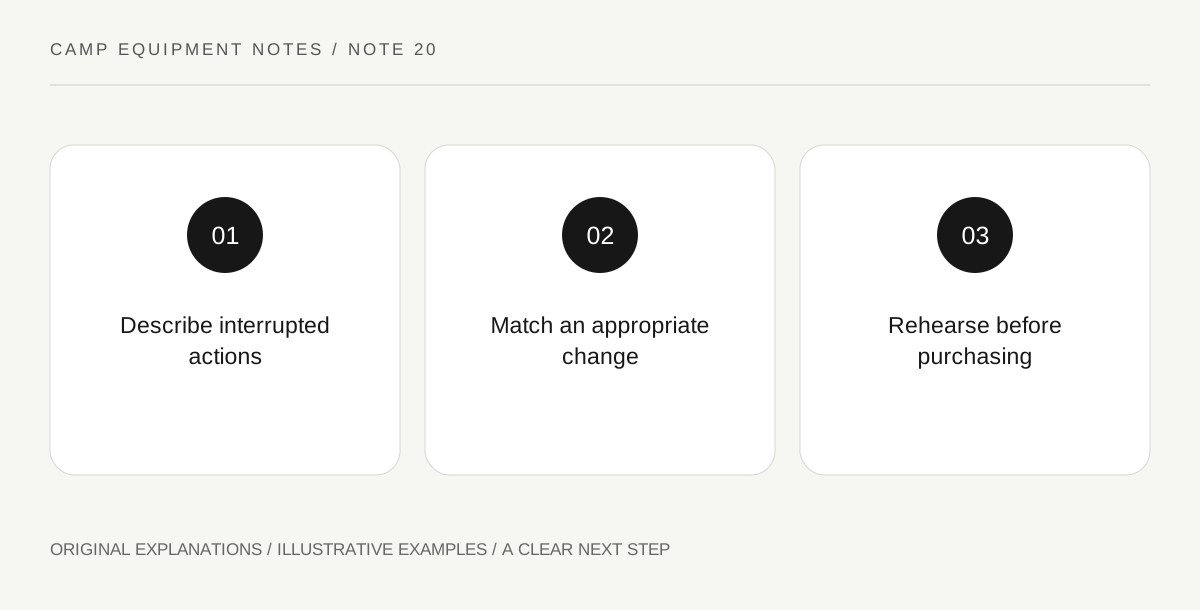
Care and storage3 min read
A useful equipment review begins with interrupted actions rather than a shopping list. Recall where the routine became difficult, then identify the smallest supported change that addresses it. Separate comfort preferences from damage, safety questions and conditions that made the whole trip unsuitable.
Read the guide ↗